Energy auditors assess how energy is used in buildings and systems to identify opportunities for greater efficiency and sustainability. They evaluate energy performance, recommend upgrades such as energy-efficient equipment or renewable energy solutions, and help develop strategies that reduce emissions and lower overall energy use. Their work supports cost savings while advancing more sustainable and resilient communities.

Energy Auditor
Career Snapshot:
Wage Text Here
per year*
Mid Level
Clean Energy & Sustainability
*Estimates are not to be used as fact. Based on publicly available sources.
The Path to Becoming
a(n)
Energy Auditor
Step 1
Earn
a(n)
High School Diploma or GED
Step 2
Earn a Postsecondary Certificate
Required Training:
Standards Occupational Classifications (SOC) code
SOC 47-4011-01
SOC Code
Training Programs and Resources:
Step 3
Find a position or apprenticeship
Required Training:
This career typically involves
More than 1 year on-the-job training
Find your next role
Related Positions:
Daily Tasks
A Day in the Life
As
a(n)
Energy Auditor
you can expect to perform these tasks frequently:
Required skills:
What It Takes
Energy Auditor
often have these skills:
Reading Comprehension
-
Understanding written sentences and paragraphs in work-related documents.
Critical Thinking
-
Using logic and reasoning to identify strengths and weaknesses of solutions and decide the best approach.
Speaking
-
Talking to others to convey information effectively in a workplace or customer-facing setting.
Active Listening
-
Giving full attention to what others are saying, taking time to understand, and asking questions as appropriate.
Complex Problem Solving
-
Identifying complex problems and reviewing related information to develop and evaluate options and implement solutions.
Operations Monitoring
-
Watching gauges, dials, or display screens to make sure a machine or system is working correctly.
Judgment and Decision Making
-
Considering the relative costs and benefits of potential actions to choose the most appropriate one.
Systems Analysis
-
Determining how a system should work and how changes in conditions, operations, and environments will affect outcomes.
Data Analysis
-
Analyzing data or information to understand problems, identify trends, or make informed decisions.
Attention to Detail
-
Being careful about detail and thorough in completing work tasks accurately.
Find careers that fit your skillset
Career Outlook
1360
Employees in
2023
1400
Employees in
2033
+
2.9%
Projected
Growth Rate
1490
Annual Projected
Job Openings
Related Occupations
Other paths to consider:

Electrician
Wage Text
Entry to Senior Level
Construction & Building Systems
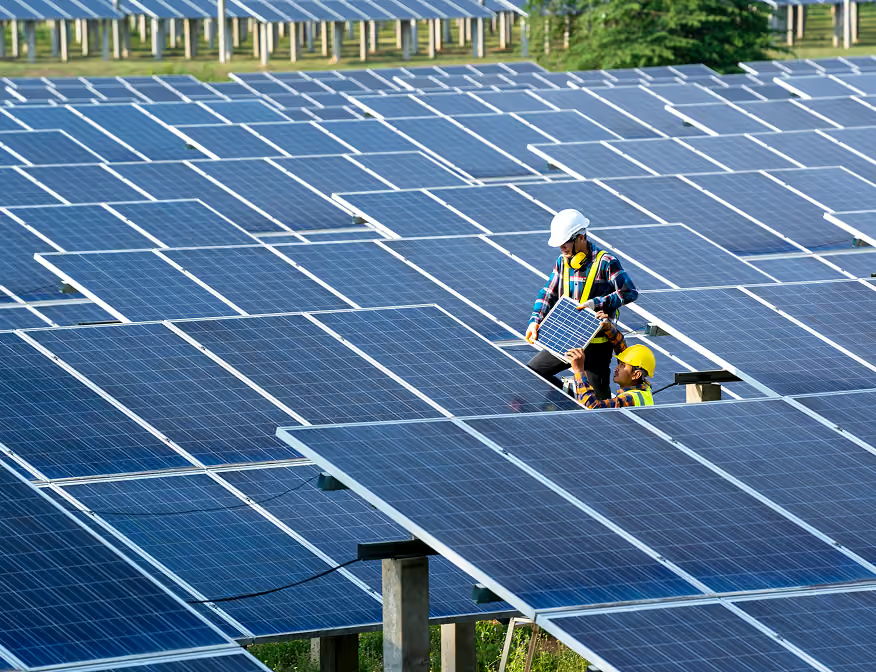
Solar PV Installer / Solar Technician
Wage Text
Entry Level
Clean Energy & Sustainability

Energy Systems Analyst
Wage Text
Entry to Senior Level
Energy, Utilities, & Infrastructure

Sustainability / LEED Specialist
Wage Text
Mid Level
Clean Energy & Sustainability

Green Building Designer
Wage Text
Mid Level
Clean Energy & Sustainability
Need help narrowing it down?
Learn more