Welders use specialized equipment to join and shape metal components in a wide range of settings, from construction sites to manufacturing facilities. They work with tools such as hand-welding, flame-cutting, soldering, and brazing equipment to fuse metals or repair structural elements. Their work is essential to building and maintaining the infrastructure and equipment that support industries, including energy and transportation.
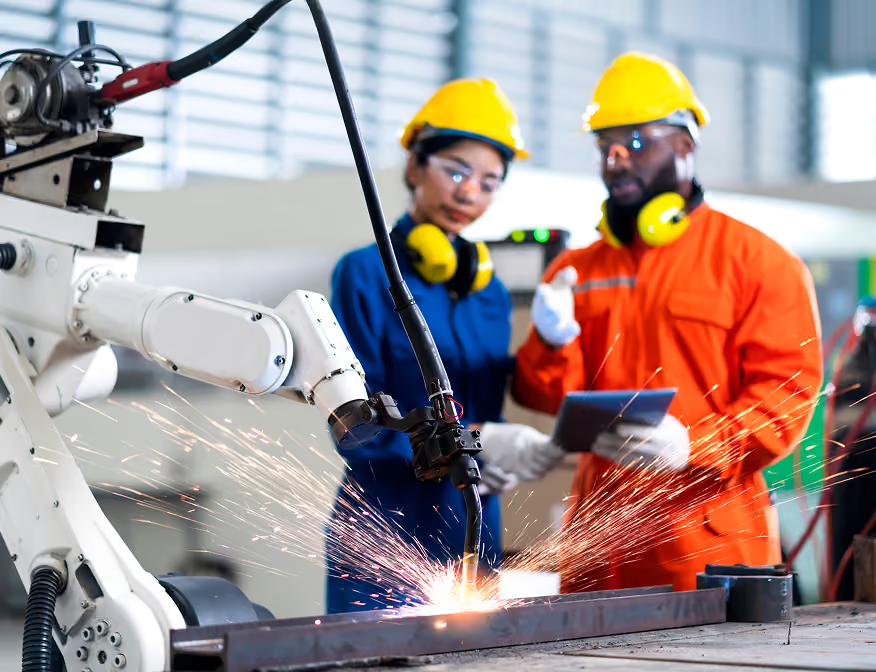
Welder - Machine Operators
Career Snapshot:
Wage Text Here
per year*
Entry to Senior Level
Manufacturing & Industrial Systems
*Estimates are not to be used as fact. Based on publicly available sources.
The Path to Becoming
a(n)
Welder - Machine Operators
Step 1
Earn
a(n)
High School Diploma or GED
Step 2
Earn a Postsecondary Certificate
Required Training:
Standards Occupational Classifications (SOC) code
SOC 51-4122
SOC Code
Training Programs and Resources:
Step 3
Find a position or apprenticeship
Required Training:
This career typically involves
6-months on-the-job training
Find your next role
Related Positions:
Daily Tasks
A Day in the Life
As
a(n)
Welder - Machine Operators
you can expect to perform these tasks frequently:
Required skills:
What It Takes
Welder - Machine Operators
often have these skills:
Operation and Control
-
Controlling operations of equipment or systems, including tools, machinery, and processes.
Operations Monitoring
-
Watching gauges, dials, or display screens to make sure a machine or system is working correctly.
Quality Control Analysis
-
Conducting tests and inspections to evaluate quality or performance of products, services, or systems.
Mechanical Knowledge
-
Knowledge of machines and tools, including their designs, uses, repair, and maintenance.
Technical Systems Knowledge
-
Understanding the components, functions, and interrelationships of complex technical systems.
Production Processes
-
Knowledge of raw materials, production processes, quality control, and techniques for manufacturing goods.
Technical Drawing Interpretation
-
Reading and interpreting blueprints, schematics, and technical drawings to guide work accurately.
Find careers that fit your skillset
Career Outlook
210
Employees in
2023
200
Employees in
2032
+
5%
Projected
Growth Rate
200
Annual Projected
Job Openings
Related Occupations
Other paths to consider:

Machinist
Wage Text
Entry to Senior Level
Manufacturing & Industrial Systems

Construction Laborer
Wage Text
Entry Level
Construction & Building Systems
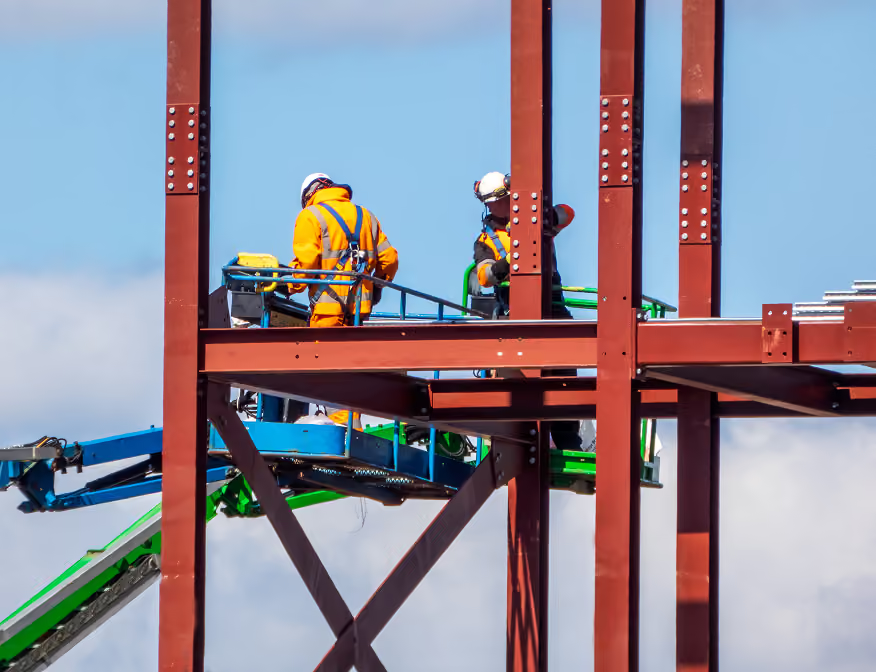
Ironworker
Wage Text
Entry to Mid Level
Construction & Building Systems
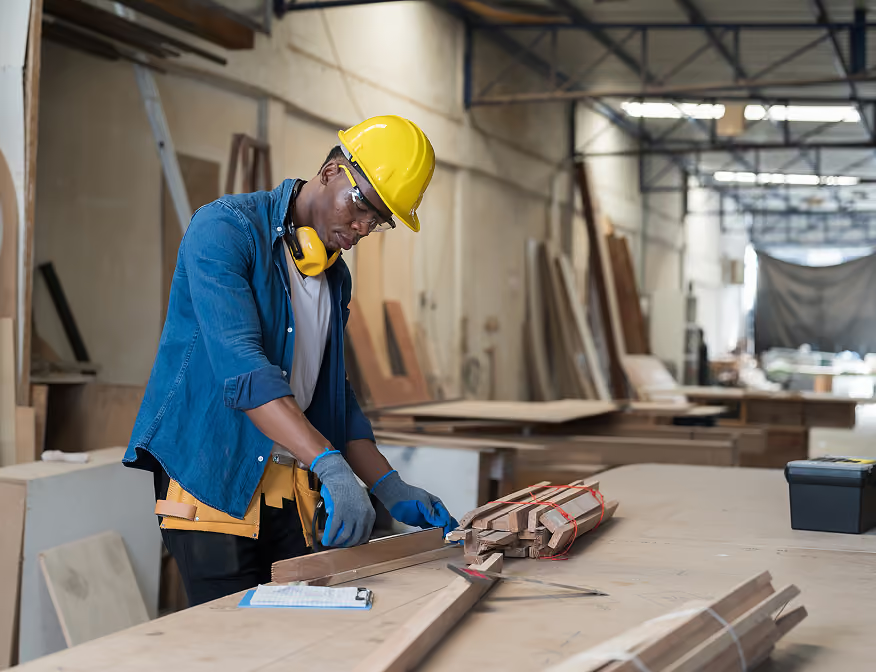
Carpenter
Wage Text
Entry to Mid Level
Construction & Building Systems

Roofer
Wage Text
Entry to Mid Level
Construction & Building Systems
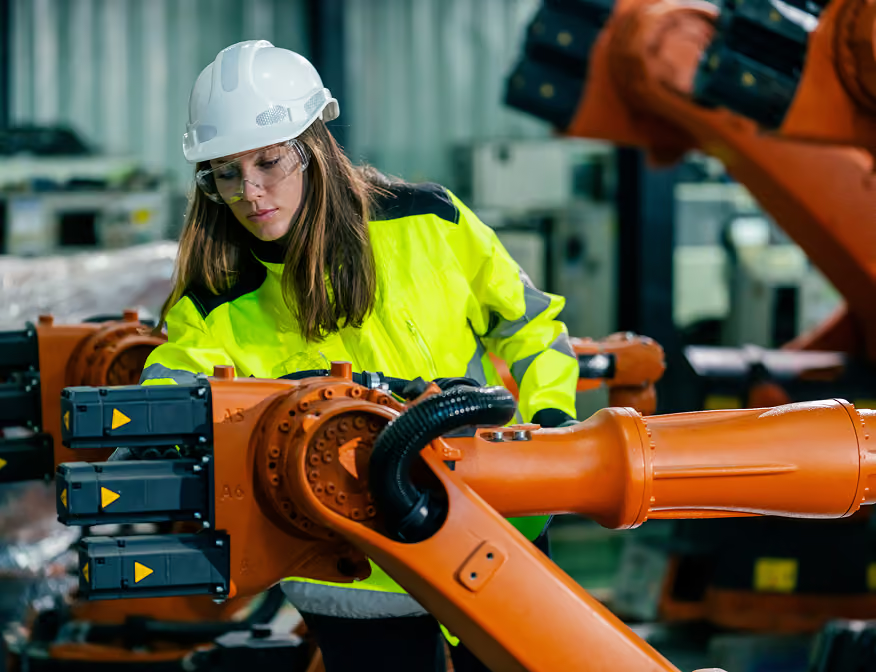
Industrial Machinery Mechanics
Wage Text
Mid to Senior Level
Manufacturing & Industrial Systems
Maintenance & Mechanical Repairer
Wage Text
Mid Level
Need help narrowing it down?
Learn more